

Why your brand book isn't enough anymore
Why entertainment companies invest in universes while brands waste money on one-off campaigns

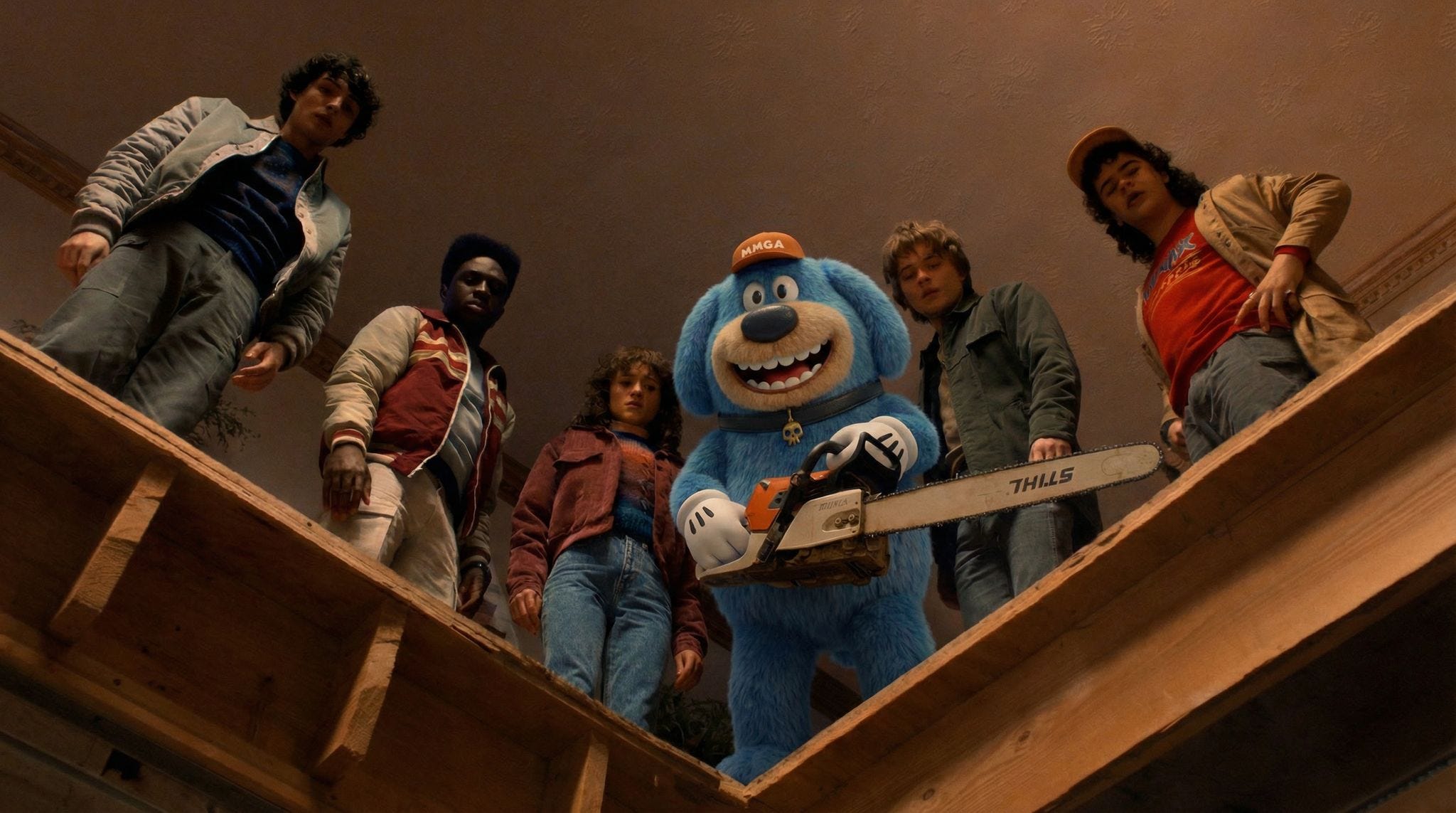
Stranger Things wrapped its final season.
But the universe didn’t end.
Now they can create spinoff series. Build theme park experiences. Launch video games. Expand into new storylines with different characters.
Why? Because they didn’t just make a TV show. They built IP. A universe rich enough to tap into for years.
Think about what made that possible. Not a style guide. Not brand guidelines. A world with specific time and place, recognizable characters with depth, consistent mood and physics, conflicts that extend beyond one storyline.
Every new extension taps into that established world without starting over. The IP compounds. Remember this bunch? Nintendo’s universe can unfold across decades of movies, media (gaming, film, comics, …), while still retaining its distinct ‘Nintendo’ feel.
Most brands will never do this. Not because they can’t, but because they think a brand book is enough.
It’s not.
You don’t need Hollywood money
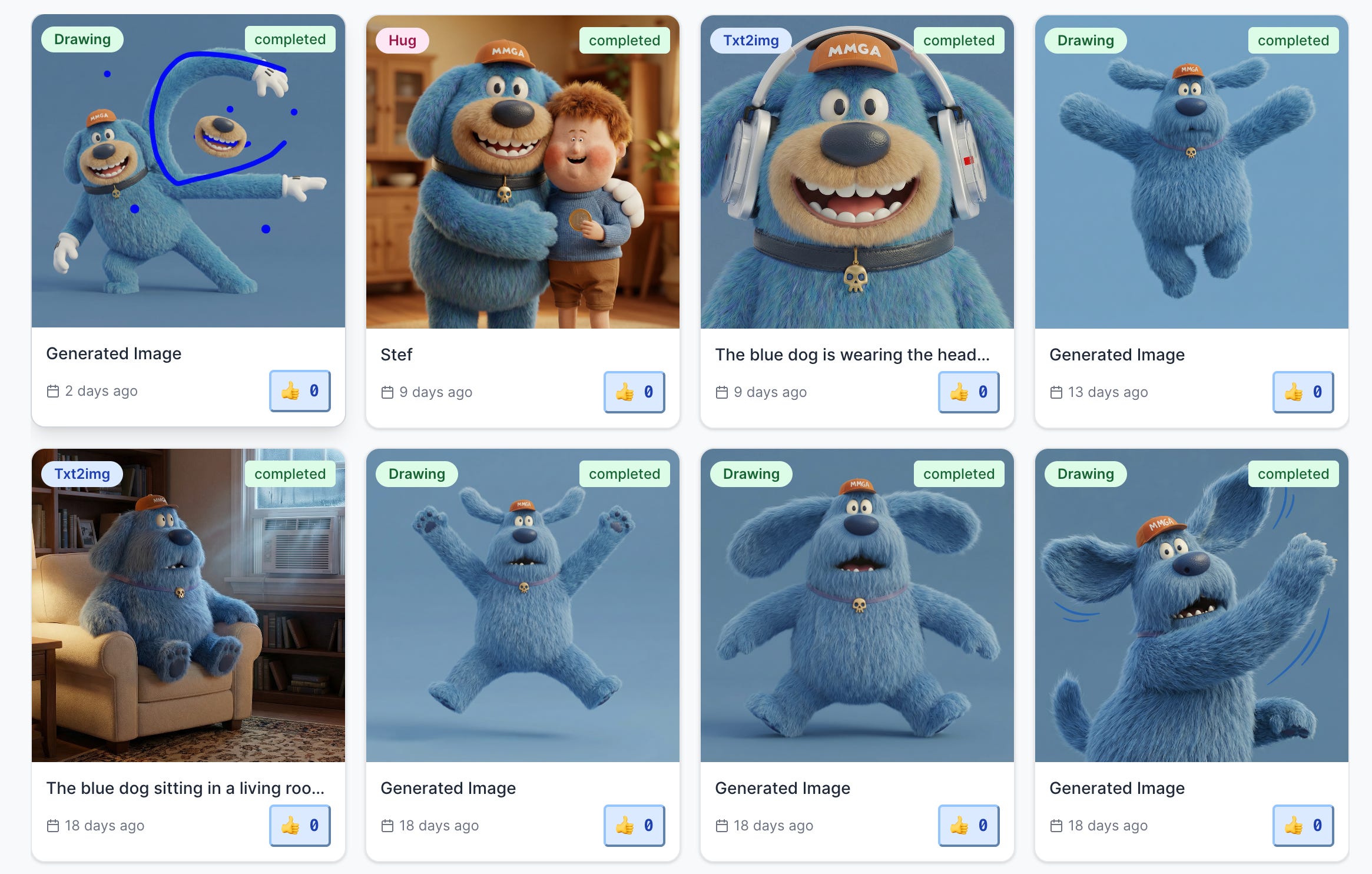
Marcel’s Lab (this newsletter) runs on a one-person business model. The Marcel universe isn’t massive: a few thousand followers, a couple of hundred true fans.
But it’s real.
Marcel is a slightly unhinged, celebrity-obsessed blue dog who does dumb shit trying to hack his way into fame. He’s clumsy. He acts like he’s real even though he’s obviously not. There’s a fun meta layer: am I the puppet master, or is he?
That character becomes a portal into the universe.
As always, building this universe follows this playbook:
Level 1 — Distinctiveness: People first have to notice your character (do the test if you’re curious)
Level 2 — Entertainment: Then they get entertained by it (hopefully).
Level 3 — Play: Then they interact with Marcel on the Sandbox (level 3), where they’ve generated hundreds of images playing in his world.
Not millions of impressions. Hundreds of fan creations. That’s people creating within your universe, not just consuming your content.
The universe keeps growing. It’s not just a “weird blue dog” .png slapped on social media posts or packaging. It’s how he engages with other mascots, with the audience, the dynamics, the lore that builds over time.
This is brand IP at the scrappy, one-person scale. Tailored to what I need, not some cinematic universe.
Marcel: “If I can build a universe with zero budget and questionable Photoshop skills, your brand has no excuse.”
The problem: guidelines aren’t IP
Your brand guidelines are necessary. Colors, fonts, and logo usage rules. Nobody’s arguing against that.
But here’s what most brands do: hand an agency (or in-house team) a request with some business objectives (hopefully), a key message (unlikely), and a link to some brand guidelines and say “go create something.”
The brand book tells them how the graphic design should look. The brief tells them what the client expects. It doesn’t give them a world to build on.
So every campaign starts from zero. Every quarter brings disconnected creative. Nothing compounds into something memorable because there’s no throughline, no universe to keep tapping into.
Compare the Market faced exactly this in 2009. They were fourth in a category of four UK price comparison websites. Generic. Forgettable. Insurance advertising is at its most boring.
Then someone pitched something ridiculous: “You’re CompareTheMarket.com, but what if we make ads for a different website? CompareTheMeerkat.com.”
They created Aleksandr Orlov, a Russian aristocrat meerkat frustrated that people keep confusing his site with theirs. His catchphrase “simples” entered the MacMillan English Dictionary. The fictional village of Meerkovo became real to audiences. Baby Oleg joined the family. Autosergei. Meerkat Movies offered cinema tickets. Toys became collectibles.
Within a year, Compare the Market jumped from #4 to #1 in their category. Now they hold 54.5% market share.
Not because they had better guidelines. Because they built a world people wanted to engage with.
That’s the difference between rules and IP.
Building worlds, not campaigns
Media companies understand this instinctively. They’re not building campaigns. They’re building IP. Recognizable worlds they can explore for decades.
Brands? They’re stuck in short-termism. Optimizing for this quarter’s metrics. Terrified to invest in anything that won’t show ROI by Friday.
But look at what happens when brands think like IP owners instead of campaign managers.
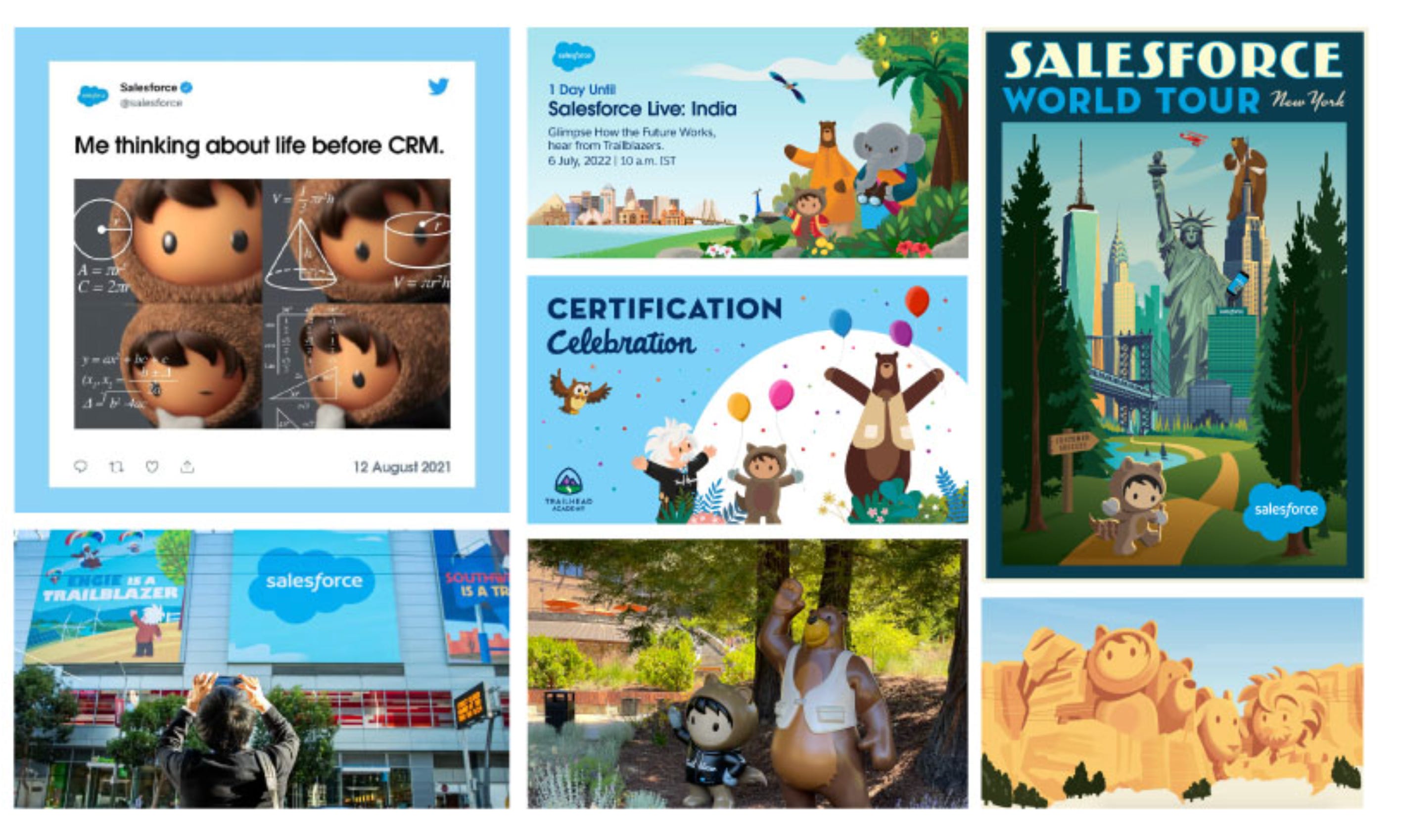
Salesforce sells complex B2B software. They could’ve gone the traditional enterprise route: serious, formal, corporate. Instead, they said
“Our brand isn’t inspired by Microsoft or SAP, we’re inspired by Disney.”
Starting in 2014 with Astro the astronaut, they built an entire character universe. Nearly 20 characters now. Codey the bear for developers. Ruth the elephant for architects. Cloudy the goat for admins. Each represents a different role in their ecosystem.
For a B2B brand selling enterprise software, this was radical.
It worked. Their numbers nearly doubled after adopting the character universe. Why? Because boring software becomes memorable when there’s a world to explore.
Progressive Insurance did the same thing in 2016. Homeowners insurance. Not exactly thrilling territory. But they didn’t create an insurance ad. They created a universe around “Parentamorphosis.” The affliction where young homeowners start turning into their parents.
Dr. Rick, the “Parenta-Life Coach,” helps them avoid disaster. Weather obsession. Socks with sandals. Becoming the neighborhood mayor.
Eight years later, 18+ commercials deep, it’s still running. Dr. Rick published a book. He appeared on Hot Ones. He has airport vending machines. The concept entered cultural vocabulary.
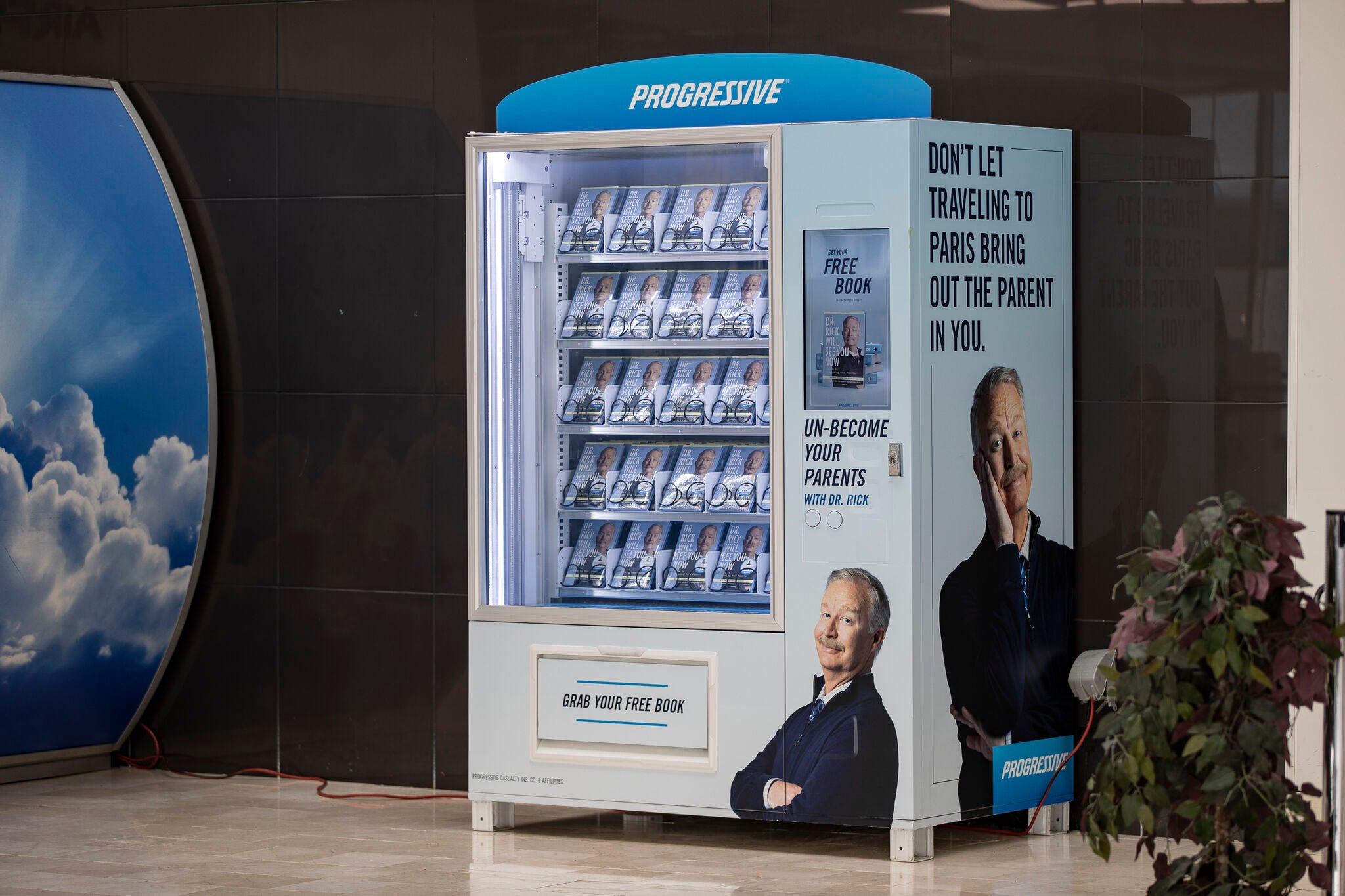
That’s not a campaign. That’s IP compounding.
Marcel: “You can’t build a universe when your CMO changes strategy every six months. But that’s exactly why the brands that DO commit to it absolutely dominate.”
Characters are shortcuts, not requirements
Characters work because faces create instant portals. We’re wired to wonder: Why does this character behave this way? What motivates them? What world do they inhabit?
That’s why Compare the Market’s meerkats worked. Why Salesforce’s Astro works. Why Dr. Rick works.
But fictional characters aren’t the only path.
Ryan Reynolds built an entire universe around Ryan Reynolds. Aviation Gin. Mint Mobile. Wrexham AFC. Every ad he touches feels like it exists in the same world. The world where Ryan Reynolds is a charming, self-aware smartass who understands marketing is ridiculous and leans into it.
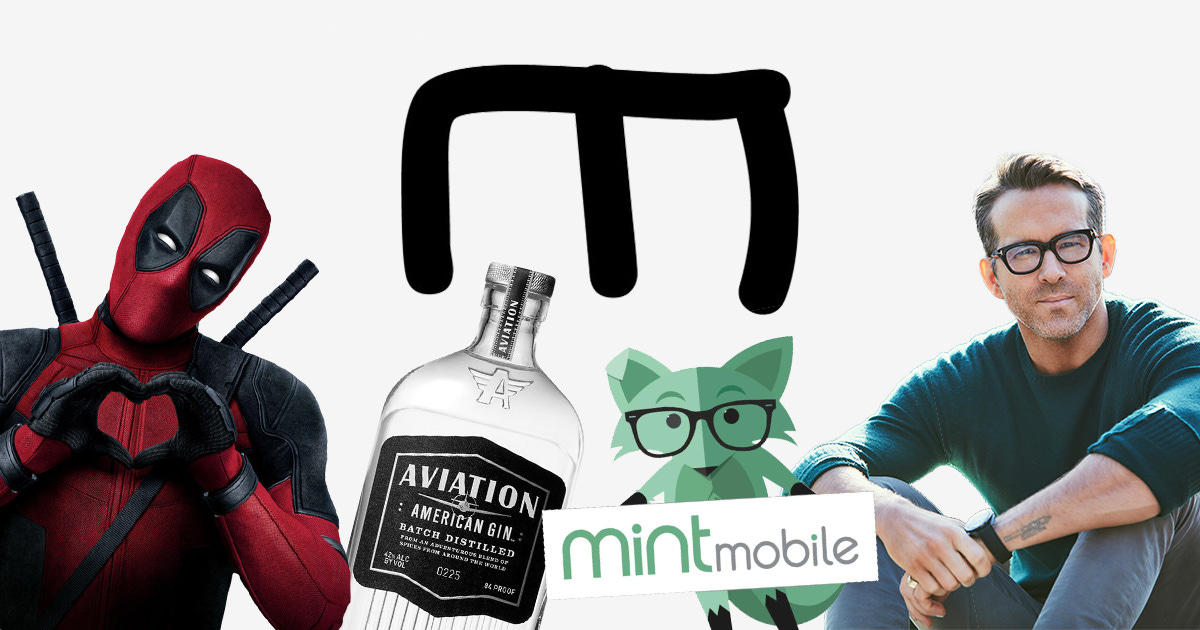
That personality creates universe coherence. No fictional character (except for Mint Mobile’s mascot) is required when the founder’s persona is strong enough to anchor everything.
MrBeast does the same. Game show competitions. Feastables chocolate. Comic books. Everything feels like MrBeast because everything operates on the same physics: absurd scale, entertainment-first, generosity as spectacle.
Most brands can’t do this. Most founders aren’t Ryan Reynolds or Jimmy Donaldson.
Which is exactly why most brands need characters. Because most brands don’t have personalities strong enough (or celebrities) to carry a universe alone.
Gen-AI plays nice with universes (and characters)/
Generative AI is terrible at rigid guidelines and incredible at synthetic universes.
Feed AI: “Use Pantone 286C, include our logo, maintain 20% white space.” Result: It hallucinates. Breaks your rules. While at the same timing generating generic slop beneath because you didn’t feed it rich context.
Feed AI: A rich, multimodal universe (images, video, text, audio that all feel part of the same world). Result: Varied output that stays coherent because it’s drawing from deep context.


The brands that will scale AI-native content aren’t the ones with perfect guidelines. They’re the ones with universes rich enough that AI can hallucinate within them productively.
This isn’t five years away. It’s happening now.
What is your favorite brand universe? I’m curious!
Want to build your brand universe?
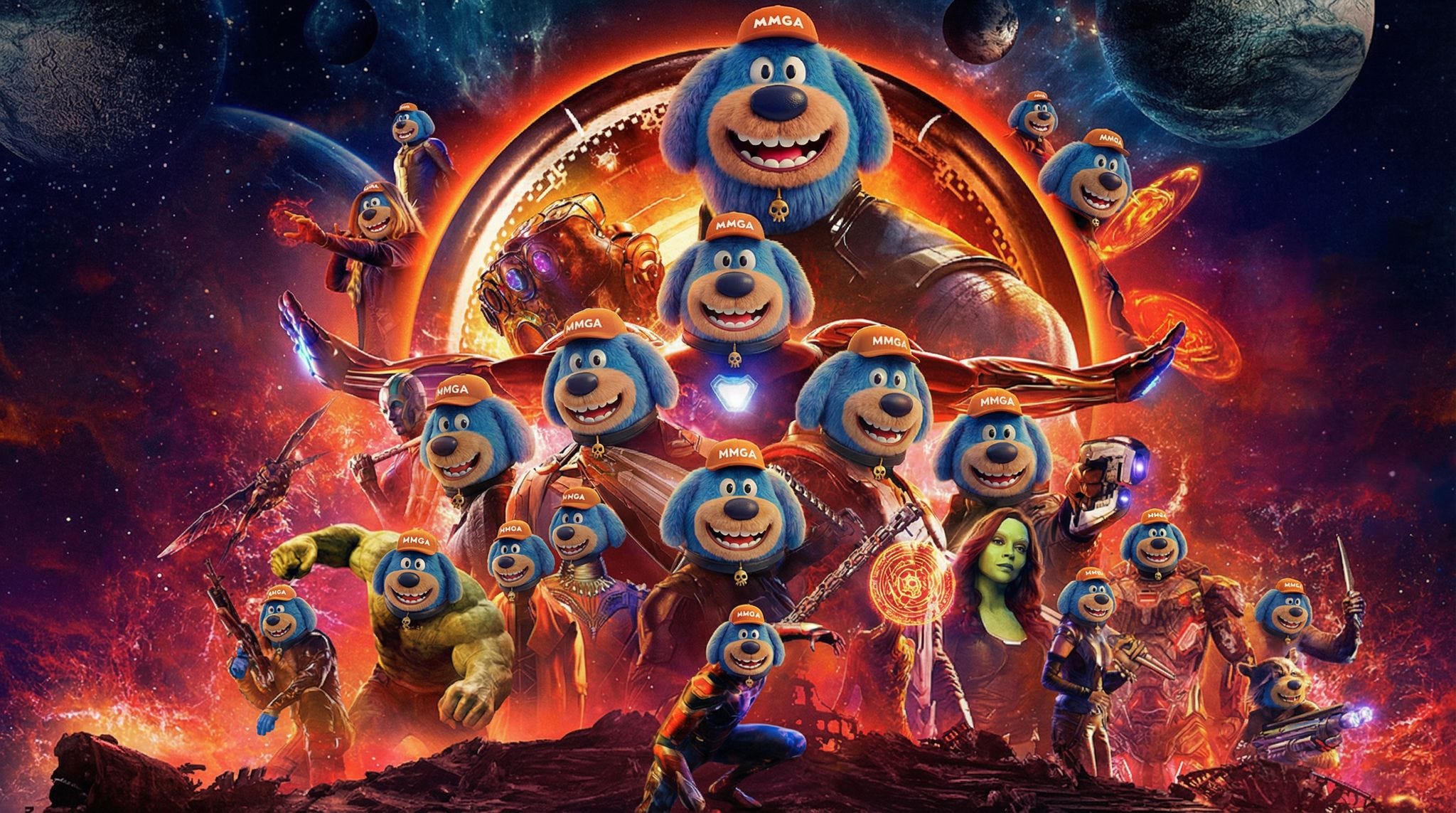
I help brands create character-driven engines powered by AI.
Book a 20-minute call | See examples
Subscribe to Marcel’s Lab - The only newsletter on building character-driven brands powered by AI. When content is infinite, characters are your moat.
More and more brands are ditching campaigns for enduring universes as you are saying... I am exploring a similar concept with a brand that you might never heard of... which is called Leone. They are building their own vibrant universe, leveraging their heritage with a pinch of Wes Anderson; find out more here: https://open.substack.com/pub/nicoaidem/p/leone-italys-digestive-pocket-ritual?utm_campaign=post-expanded-share&utm_medium=web