

Who owns a meme?
Brainrot lawsuit, a log with a bat, World cup mascots standing by the sidelines and AI slop. Welcome to the messy future of IP.

There’s a character right now with tens of millions of views, an official plush line, a global toy license headed for mass retail, an EU trademark, and a federal court case about who controls it.
Nobody agrees on who made it.
It’s a wooden log with a face, holding a baseball bat. It announces the pre-dawn meal during Ramadan. Its name is Tung Tung Tung Sahur, and it might be the most important IP story of the year.
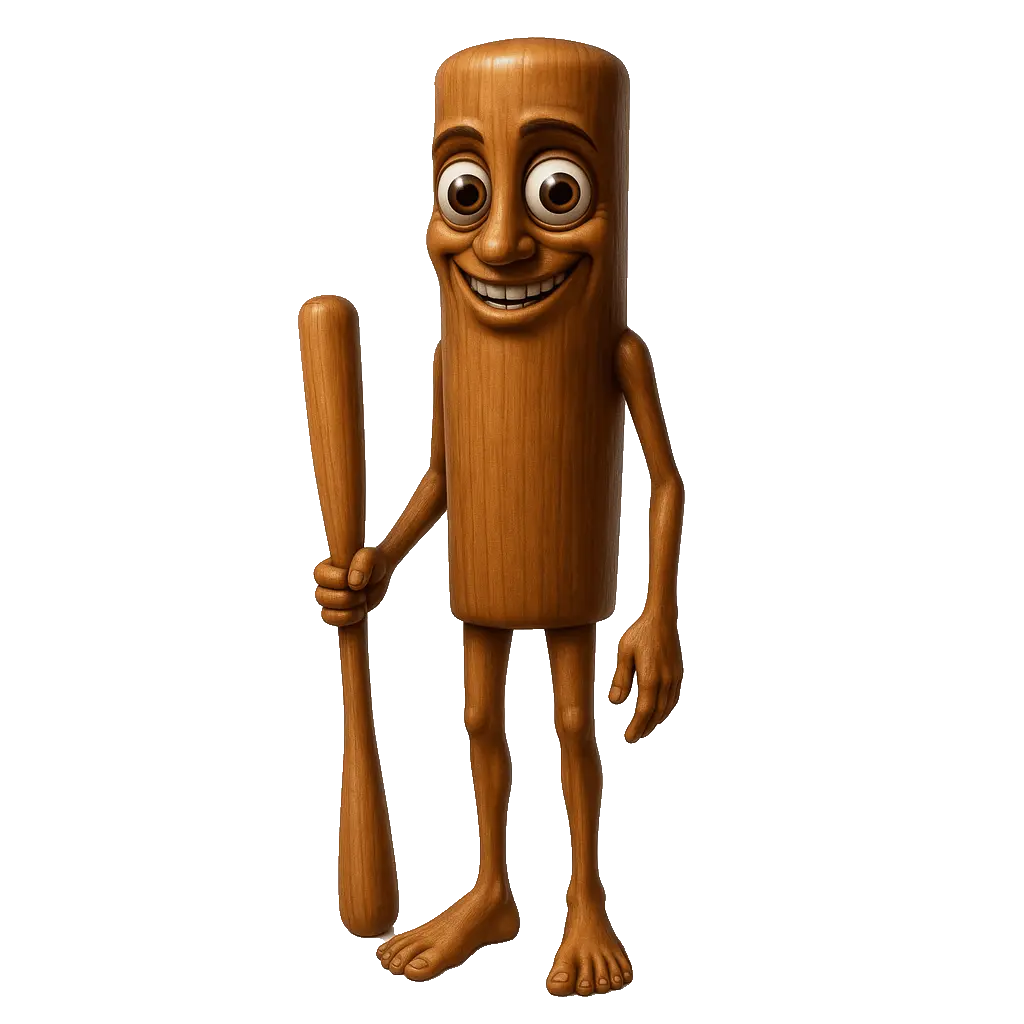
The meme that became a franchise
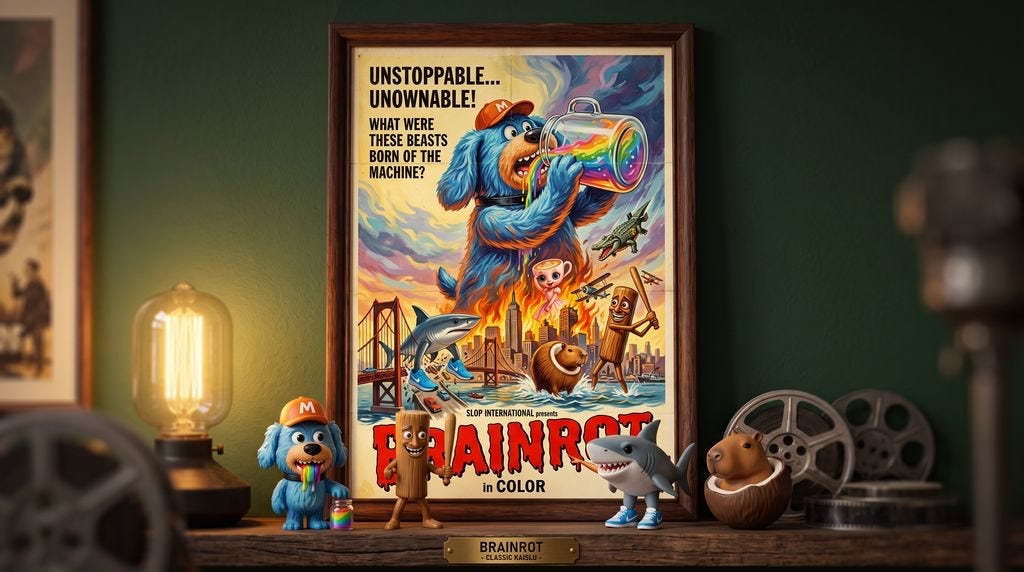
Quick catch-up if you’ve been spared. “Italian brainrot” is a wave of AI-generated characters that started in early 2025: surreal creatures with pseudo-Italian names, made in minutes, remixed by thousands. A shark in sneakers. A ballerina with a coffee cup head. The log with the bat.
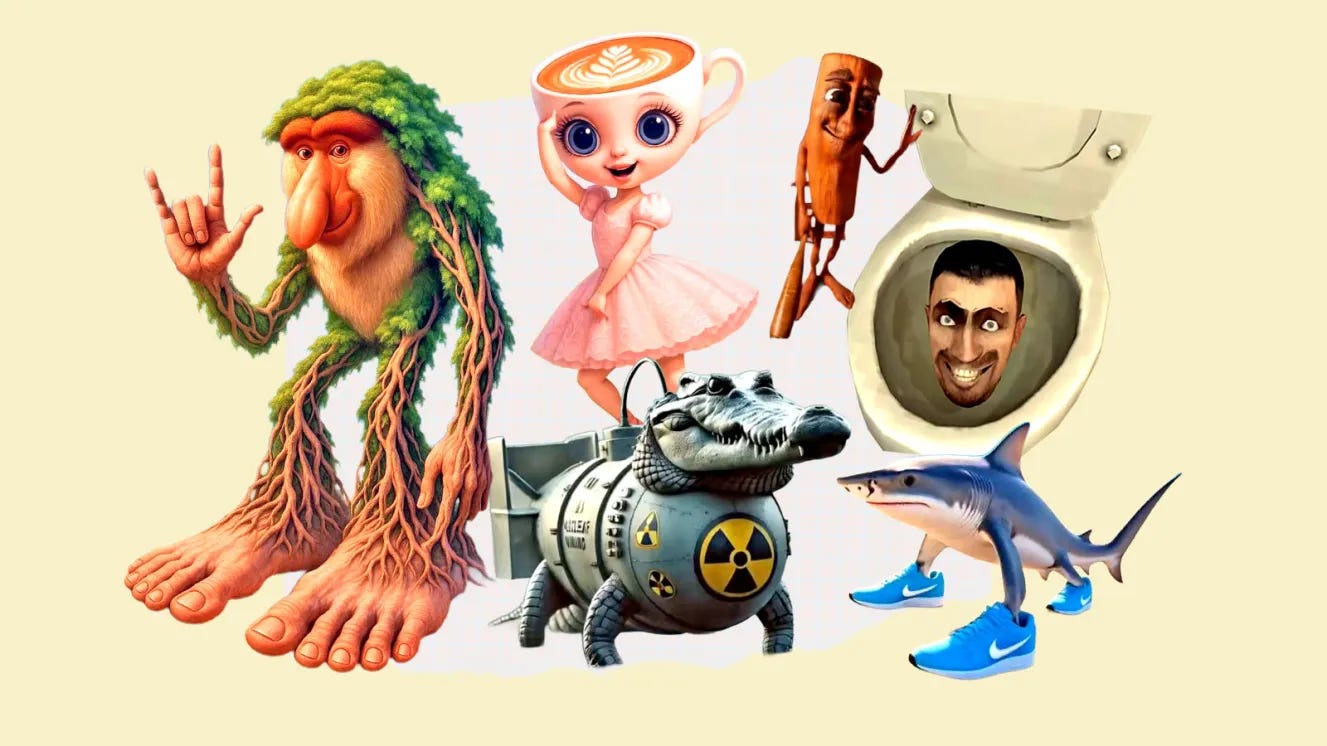
One TikTok user reportedly posted the original Sahur video and pulled 31 million views in a month. Then the internet took over. Thousands of creators gave the character lore, enemies, a universe. No brand book, no committee, no budget. The swarm built a franchise for free.
Then the money showed up, and the whole thing detonated.
According to El País, a European trademark on Tung Tung Tung Sahur has already been granted, with around 20 applications filed worldwide. The US filing sits with a company most fans have never heard of. A Roblox game already had a character pulled over a trademark claim. And the creators of Steal a Brainrot, the Roblox game that aggregated all these characters, are in federal court fighting a company called Mementum Lab over who controls them. Trade press calls it a custody battle. That’s the right phrase. This is a divorce where nobody can prove they were married.
Not gonna lie, I feel very old watching this stuff 😅
Meanwhile, PhatMojo signed a global toy license for Steal a Brainrot. Collectibles hit mass retail later this year.
Read that sequence again. The internet authored a character. Lawyers are assembling the ownership afterwards. And the party capturing the most value isn’t any of the authors. It’s the game that gave the characters a place to play.
Marcel says: authorship is free now. Ownership is what’s left to fight over.
The mirror image: owning everything, making nothing
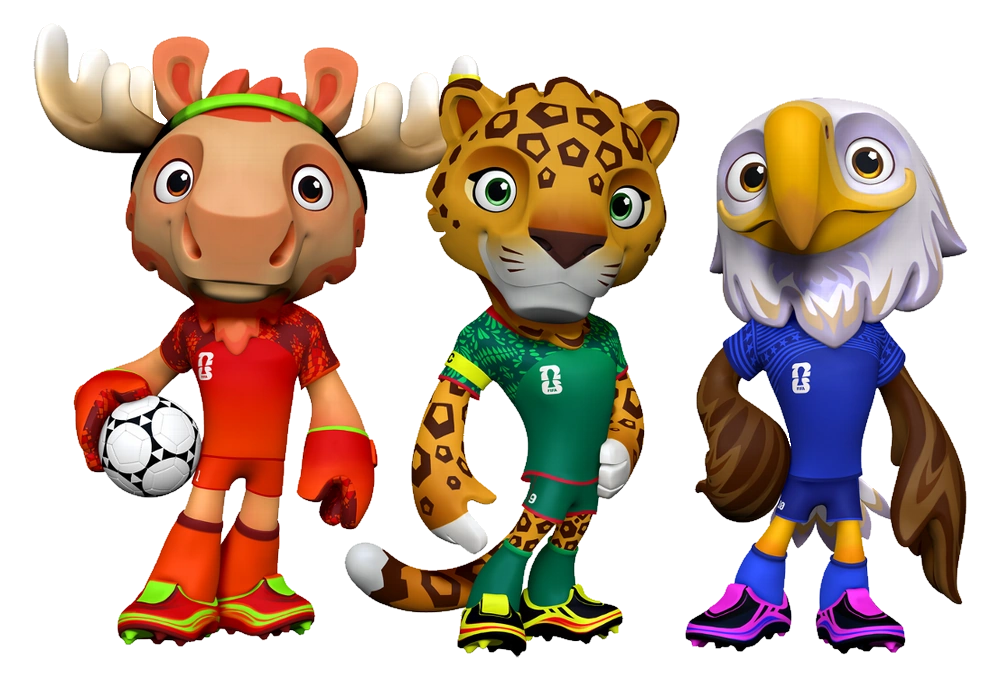
Now flip it. The World Cup is the most tightly owned entertainment property on earth. FIFA controls the marks, the stage, and, for 2026, three official mascots, a first: Maple the moose in goal, Zayu the jaguar up front, Clutch the eagle in midfield. Licensed, protected, already in a video game.
And the World Cup content people actually send each other? Fan-made. There’s a full AI-generated football movie on YouTube. Funny Matrix memes. Endless remixes. FIFA owns everything and authors almost none of the culture around its own event. It also failed tremendously in building something worthwhile to watch with its own mascots.
So here are the two failure modes, side by side. Brainrot is authorship without ownership: the crowd makes something priceless it can’t hold onto. The World Cup is ownership without authorship: the institution holds everything, and the crowd makes the magic somewhere else.
Marcel says: a trademark without love is paperwork.
And the pipeline got absurdly fast
This used to take decades. Mickey needed generations to go from cartoon to empire. Tung Tung Tung Sahur went from a TikTok post to trademark filings to a mass-retail toy deal in under two years. Doodles is building custom toys straight from its characters. The distance between “the internet likes this character” and “this character is on a shelf” has collapsed to months.
Which means the ownership question isn’t academic anymore. It arrives with the first viral clip, and it arrives fast.
The playbook
Put the two failure modes together, and the winning position falls out by elimination:
1. Build the character. Real authorship, real love, a personality worth remixing.
2. Own it. Trademark, design registration, the boring paperwork, on day one, not after the third viral moment.
3. Then open the doors. Invite people to play with it. Duolingo lets the internet do unspeakable things to Duo, and the bird only gets stronger. Labubu became a phenomenon because people style it, trade it, and film it. The remixing isn’t a threat to the asset. The remixing is the asset. You just have to be holding the paper while it happens.
Most brands do exactly one of the three. They own a character nobody loves, or they chase a trend they’ll never own, or they build something great and lock it in a brand book where nobody can touch it.
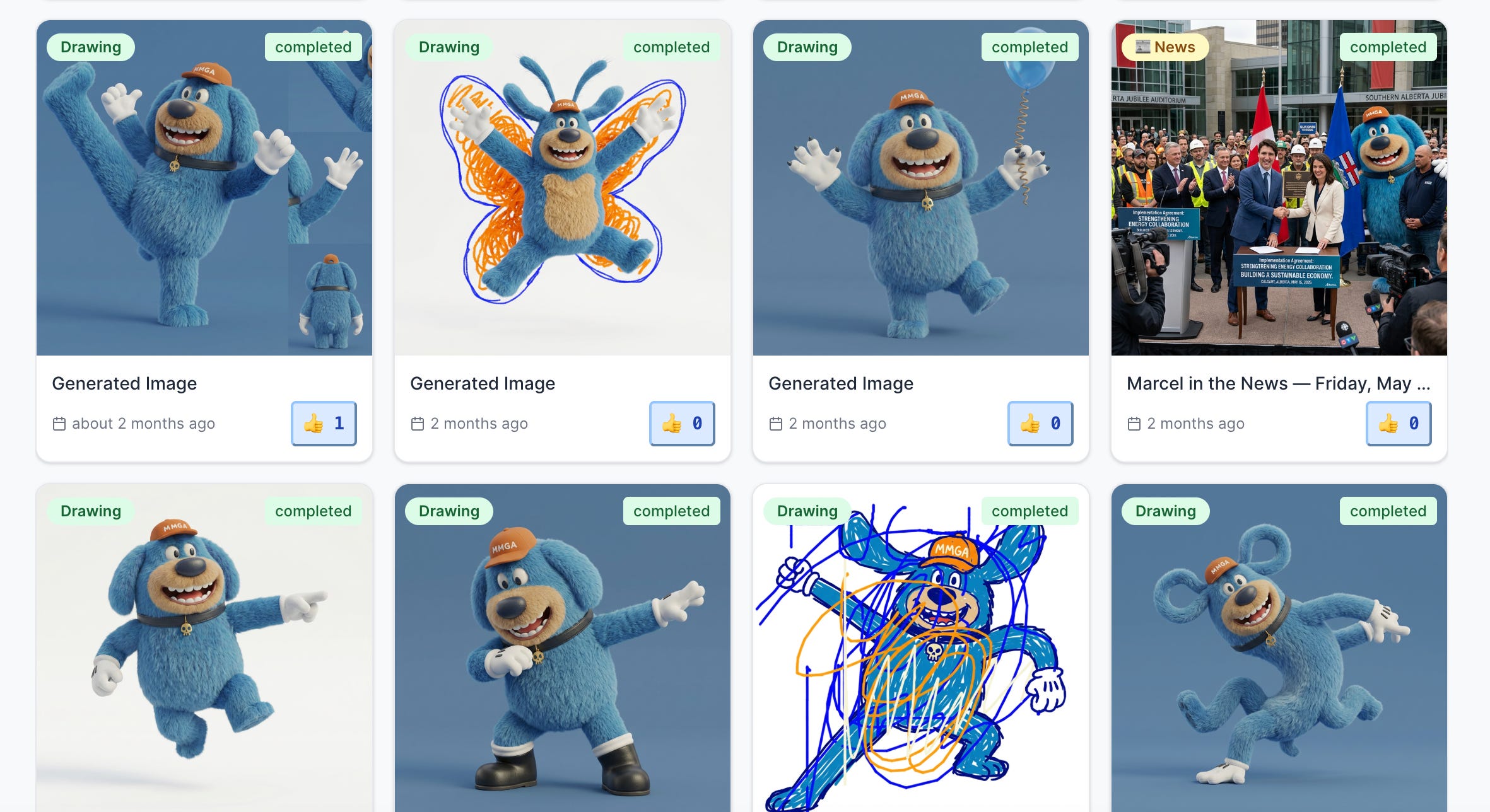
This is the whole Marcel experiment, by the way. Built him, own him, and I hand him to AI tools, to my newsletter, to anyone who wants to play. The internet can’t steal what you’re actively giving away. It can only make it more famous.
Marcel says: build it, own it, then leave the door open.
Want to build your brand universe?
I help brands create character-driven engines powered by AI.
Book a 20-minute call | See examples
Subscribe to Marcel’s Lab - the only newsletter on building character-driven brands powered by AI. When content is infinite, characters are your moat.
Maybe it all comes down to giving people the tools to create fun content and memorable moments. And if a character can become the vehicle for that, even better.
Strangely, it also made me think of Rage Bait, a very strong exhibition I saw in Venice, part of the unofficial Biennale. It featured Italian brainrot characters oversharing their childhood trauma to a therapist. Completely unrelated, perhaps. Except that it also showed how ubiquitous they are now.